-
Tragedy at D Chowk: Anatomy of a failed coup
Part 1: The Buildup
Anwar Rizvi
It was around 2 am in London, early morning in Pakistan on the 25th of November when I got a whats app message from a dear friend in Rawalpindi, a dedicated PTI supporter: the message simply read: “Its all over.” Just those three very plain and simple words that conveyed a deep sense of despondency as well as sorrow and anger. I called my friend. He did not pick up. I guessed he needed the space to get to grips with what must have been a particularly tough night for him. I knew that he was planning to be in D Chowk that night but a security contact in Islamabad had told him to stay put in Rawalpindi. I am glad he didn’t go. He is one of very few people who values our friendship above politics and I have always appreciated that.
The build up to what transpired on November 24th is a curious mix of a lot of belligerent statements being released by some of the PTI hawks on social media while there were others who seemed to be adopting more conciliatory approach simply calling it a peaceful protest that would only end with their main demand of Imran Khan being released from jail. The rhetoric from the hawks was anything but conciliatory. They were spoiling for a fight. There were talks of taking over the capital, of releasing their man from prison by any means necessary and to send the incumbent government into exile quoting examples of recent happenings in Sri Lanka and Bangladesh. The response from the authorities was ineptitude at best and a flat denial that any march into the capital was even likely to take place. If there is one thing the PML (N) led government has failed to come to grips with, it is their understanding of the power of social media, or the lack of it thereof. Most of the senior PML (N) figures continued to sing the achievements of their government and especially the projects their beloved Chief Minister of Punjab Maryam Nawaz seemed to be initiating on an almost daily basis. The gathering of dark clouds over the capital seemed to be the last of their worries.
Meanwhile the PTI had decided to name their protest “The Final Call.” This was going to be it as far as the party hawks were concerned. It was a do or die and little did they know at that point what a self fulfilling prophecy this would turn out to be. There was going to be a revolution, nothing less. Some were openly chanting for Jihad, many supporters had started posting selfies wearing a kafan, the Muslim burial shroud and I saw at least one post where the content creator had put his date of birth along with the 24th of November as the day when he would either become a Shaheed or come back a Ghazi. He would either die a martyr or return victorious from battle. A statement purportedly from IK himself said that the 24th of November would be a test of peoples’ faith. The omens were looking not looking good.
In the days leading up to 24th November I had several phone conversations with my PTI friend in Pindi as well as a journalist acquaintance in Lahore. Both were of the opinion that to make this Final Call a success mass mobilisation would be needed from the major urban centres of Punjab and they were not seeing any signs of that. My journalist acquaintance told me in blunt Lahori style Lori nai nikalday bhul jao. My friend in Pindi was meanwhile getting really frustrated with the local leadership. Plans were being made and scrapped. Local leaders were suspecting each other of being moles and the ordinary workers and supporters didn’t know which way to turn. They felt they were being left leaderless. Some hardcore supporters decided to head straight to KPK and join the march from there. Others took the view that perhaps 10-15 thousand people could be mobilised from Pindi and head straight to D Chowk to coincide with the expected arrival of the marchers from KPK. That plan was however scrapped as the movement of large numbers of people from Pindi towards Islamabad would’ve surely aroused the suspicions of the security forces who were on a high state of alert anyway. Finally it was decided to slip into the capital in small groups and wait for the KPK marchers. But even that was proving difficult as the numbers simply weren’t there.
The authorities meanwhile were busy trying to block every possible entry route into Islamabad. Motorways were closed, internet services restricted and mobile signals were jammed. A truly pathetic and laughable excuse of motorway maintenance was concocted to justify the restrictions. Of course no blockade would be complete without those famous containers and several were put in place at key entry points. DIG Islamabad was issuing dire warnings to anyone who tried to break the law and the Federal interior minister who also runs the Pakistan Cricket Board in his spare time was personally overseeing the security arrangements.
The government continued to peddle the all is well line while they talked about everything else bar the impending assault on the capital. Meanwhile the PTI social media went into overdrive. All gloves were now off and the only acceptable outcome would be the overthrow of the incumbent administration. Banners proclaiming Either Imran Khan or Martial Law and No Imran No Pakistan were now openly on display.
It was becoming a battle of wills and neither side seemed to be giving an inch. The dye was now well and truly cast for a head on confrontation and things were looking more and more ominous by the hour.
-
The Coronation of King Charles III (and why I spent the day pulling weeds from my back garden)
Anwar Rizvi
A few weeks ago I received a note dropped through my letter box: it was a very polite note from one of the neighbours informing me that a street party was being planned for the day of the official Coronation of King Charles and if I would be so kind as to make a small contribution? The note also asked for any ideas/suggestions. Up to that point, I had been by and large trying to ignore the rising hyperbole in the lead up to the main event. If the British media does one thing really well, it is to overdo to death anything that relates to the Royal family. The late Princess Diana could tell you a thing or two about that. And I just realised that overdoing to death applied to the tragic Princess literally and metaphorically.
I did respond to the note, equally politely, briefly informing the organiser why I would not be joining the party and would be quite happy to discuss my views in person. The offer was never taken up. The note however started to fill me with a sense of dread. A weekend was coming up with wall to wall coverage of the Coronation ceremony and the lead up was going to be a rising crescendo of the worst kind of fawning commentary known to humanity with the odd bit of dissent thrown in here and there for the purposes of balance. The coverage of the ceremony itself started at midnight on all the mainstream terrestrial and satellite channels and continues as I write this 24 hours later.
Now I have no issues with folk wanting to celebrate what is if truth be told a once in a lifetime event. The monarchy for a very large segment of the British population is still a venerated institution. For many people, the monarchy symbolises stability and continuity, especially in uncertain times. I totally get and respect that. But therein lies a problem: for many people like me, and this also includes a significant number of people who would call themselves ethnically British, the monarchy is fast becoming an anachronism and the sooner it goes the better. And for migrant Britons like me, the monarchy is a permanent reminder of a very painful past. A past that is covered in blood, gore, looting on an unprecedented scale, the bankrupting of what was once one of the world’s wealthiest economies and the humiliation of a people that lasted almost 200 years. And an event such as today’s brings back memories of that entire inglorious episode in all its ugliness and awfulness.
And so this afternoon, as the Archbishop of Canterbury put that bejewelled crown on the head of King Charles and cried God Save the King, I was reminded of another event that took place more than 160 years ago in Delhi, India. An event whose scars have never really healed.
On the 20th of September 1857, soldiers of the British army led by Major William Hodson surrounded the tomb of the Mughal Emperor Humayun and captured Shah Bahadur Shah Zafar, the reigning Mughal emperor after the failed war of independence against the colonisers. While the history behind the war of independence and how the British finally managed to subdue it is a subject in its own right, lets just stay with the events that followed from the capture of the king. The very next day after his capture, Major Hudson shot dead his two sons Mirza Mughal and Mirza Khizr and his grandson Mirza Abu Bakht in cold blood. The king was kept captive in his wife’s haveli where he was subjected to constant abuse and humiliation by the British soldiers guarding him. The news of his sons and grandsons’ execution was given to him summarily and he was not allowed to make funeral arrangements for them.
Bahadur Shah Zafar was put on trial by the British in Delhi’s Red Fort. It was a show trial. There was no due legal process and the only witnesses were those willing to testify against the king. He was already old and frail and in no position to defend himself against the full might of the British empire now stacked up against him. The charges laid against him were as follows: Aiding and abetting the Sepoy mutiny, encouraging and assisting persons in waging war against the British government, assuming the sovereignty of India and causing and being accessory to the murder of Christians.
Just take a few seconds to read those charges again: the Emperor of India was on on a sham trial for wanting to assume the sovereignty of his own country and for encouraging Indian soldiers to rise up against their occupiers. And he was accused of being an accessory to the murder of Christians. The irony of these so called “Christians” being in India in the first place without anyone wanting them to be there was completely lost here.
The so called trial ended as expected and as planned: Bahadur Shah was convicted on all of the above fraudulent counts and as a sort of plea bargain due to him surrendering he was spared death and sent in exile to Rangoon in Burma instead. Of course the colonisers were going to make sure that the journey was going to be as uncomfortable and as humiliating as possible so the king and his family were put on bullock carts all the way from Delhi to Calcutta from where they were put on a steam liner to Rangoon.
Meanwhile the royal palaces were looted at will, and much of that loot was brought back to Britain, never to be returned again.
Bahadur Shah Zafar spent the remainder of his life locked up in the windowless garage of a British army officer in Rangoon, who remained spiteful of him right until his death. And when he died after suffering a long and miserable illness for which it is unlikely that he was provided any form of medical care, he was buried in an unmarked grave near a Buddhist pagoda. It can be said with a degree of certainty given the spitefulness of the colonisers during his captivity, that he was not allowed any form of dignity in death and the burial was done more to dispose of the body rather than to give him a dignified funeral. His grave was not discovered until 1991. It is now a “dargah”, a shrine.
It should therefore be of no surprise to anyone that I find an event like today to be not just underwhelming, but actually an ugly reminder of the terrible terrible injustice that was inflicted upon my people, and my king, whatever his faults may have happened to be. And therefore my mood is less than celebratory.
And despite all that, I bear no ill will towards those who revere the monarchy. Most would probably not be aware or do not wish to learn about the crimes of their ancestors. Most also do not see how that is any shape of form relevant to the modern world. I do not have any issues with that either. But if we all claim to live in a free society then my voice also needs to be heard and on days like this it needs to be heard louder and clearer.
-
COME ON WOODY!!
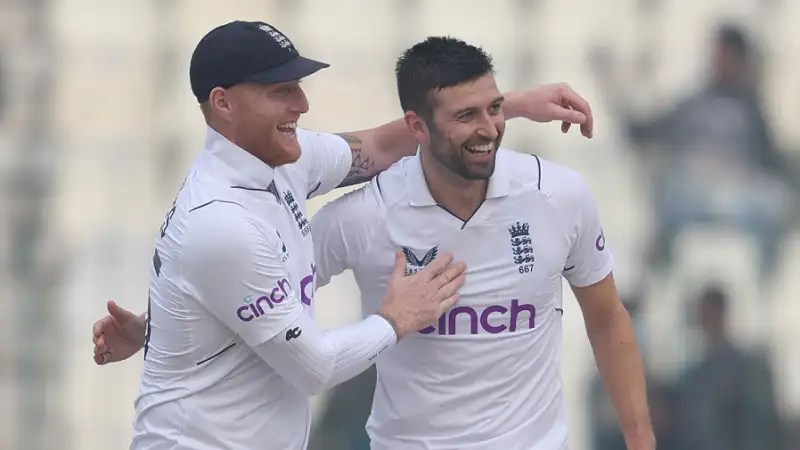
There was a moment in the second Test match in Multan that summed up the Pak-England series and the attitude of the England cricket team and how much this series and Test cricket meant to them. Mark Wood had just taken the 9th Pakistan wicket. Ben Stokes who was standing like a colossus at mid off, jumped up several feet in the air and roared “Come of Woody” with so much passion you would think he had just won the final of a World Cup. That moment to me summed up the intensity with which this England team play their cricket and the lack thereof from the Greens. It is not that Pakistan have totally disgraced themselves in this series. The 3-0 defeat perhaps not an accurate reflection of some of the finer moments where the game hung in the balance for periods of time. But the key difference has been in their approach to a form of cricket that seems to be less and less of a priority to the majority of the players. It is not a healthy attitude. Only Test cricket turns good players into great ones. You can play the shorter formats all your life but you will never be recognised as a GOAT unless you have blasted Australia out with ferocious pace at the MCG, scored a hundred against England at Lords or spun the West Indies to defeat in Bridgetown in a 5 day Test match. None of the games all time greats will every reminisce about the sixes they hit in a T20 game, but they will forever remember their 5 wicket hauls and their hundreds in the game’s toughest format. Because they know there is a reason why it is called Test cricket. It is a test of a players skills as much as it is a test of their grit, determination and their desire to succeed at the highest level against the best in the world. Pakistan have not become a bad team after this series. They have some of the finest players in the game today and a bowling attack that is the envy of the world. They just need to rekindle that passion for Test cricket or all that talent will eventually come to nothing. And they seriously need to invest in pitches that will make the game more entertaining.
On a separate note, what Pakistan have proven without doubt is that they can live without having to kowtow to India for their cricket to survive. Many Pakistan cricket fans get involved in pointless debates about this and that Pakistan player being better than some or the other Indian player. Honestly guys, that is wholly unnecessary. We have some of the finest cricketers in the world and there is absolutely no need for any comparisons. The Indian cricket board continues to play politics and show extreme pettiness in trying to bring Pakistan cricket down. We continue to prove them wrong. Let the rest of the world be beholden to them. We dont need them and we have proven that. And for me that above all remains a matter of immense pride.
Like
Comment
Share
0 comments
-
Anatomy of a Failed Revolution: The long march that was never meant to be
It was perhaps sometime after Imran Khan Niazi’s ouster as Prime Minister of Pakistan when the party leadership concluded that the time had come to openly confront and malign the institution that had brought them to power in the first place i.e Pakistan’s military establishment. The party had a large, enthusiastic, tech and social media savvy team at their disposal and they understood the impact that catchy slogans and sharp one liners on twitter could make. Once the go ahead was given, the PTI social media brigade got to work and used every possible medium ruthlessly and very very successfully to propagate their leader’s narrative. Both the new rulers and the military establishment were made to look totally impotent against the avalanche of propaganda and downright abuse that was to follow and has continued unabated for the months that have followed. Nothing like this had ever been experienced before in Pakistani politics and neither the PDM nor the so called establishment seemed to have a clue as to how best they could respond to it. The battle for hearts and minds had already been won by the PTI and it was time to go for the kill. For IK the only way was to use his immense popular appeal and hound the incumbent government out of power by the use of sheer street power. He had built his narrative on an entirely baseless and thoroughly debunked conspiracy theory and laced it with a very massive dose of faith. It was a foolproof formula. His followers had not only bought into the narrative, they had actually added a few versions of their own, all of which were now being openly propagated on social media and being gleefully lapped up by the believers. IK gave a call to his followers to converge on the capital on the 25th of May and to force the incumbent government out of power by laying siege to Islamabad. Unfortunately for them, they were up against Rana Sanaullah, the interior minister, who carried many old grudges and he wasn’t about to hold back. The PML N leadership had made it very clear to the military establishment that they should either rein in the PTI or get out of the way. The establishment adopted a wait and see policy which effectively gave Rana Sana carte blanche. PML N had the added advantage of controlling the provincial government in Punjab courtesy of the defecting members of the PTI which gave them leverage over the provincial police. They were to use both federal and provincial powers to maximum effect. Many thousands of PTI supporters paid heed to their leader’s call. Despite roadblocks and Punjab police using every underhand tactics to stop people from reaching Islamabad, a substantial number made it into the capital. The government responded with brute force.Despite early morning court orders obliging the authorities to allow the protest to go ahead peacefully in designated areas, the damage was done. It became a game of brinkmanship and almost inevitably it was IK who blinked first. By the time Khan arrived in Islamabad, the battle for the capital had already been lost. IK made a brief appearance and after giving an ultimatum to the government to resign in 6 days or else he would return with even greater numbers, he went back to his power base of Peshawar from where he did not emerge for several days after. That ultimatum was never to materialise. The very tame end to that sorry episode had given enough breathing space to both the incumbent government and the Establishment to regroup and strategise.
There were two very clear outcomes from the 25th of May episode: Firstly that despite IK’s enormous popular appeal the followers had not come out in the expected huge numbers and secondly when it came to the crunch IK bottled up. This habit of his had been evident from past history and more than a few examples could be quoted here, but 25th of May made it glaringly obvious. This was about as much as the Establishment needed to know. They were no longer going to be blackmailed by Khan’s popular appeal. And while the campaign of vilification continued unabated, PDM and the Establishment started making strategies of their own. There was a hardening of attitudes and as proof that they were becoming less and less tolerant of PTI’s rhetoric, Khan’s senior aide Dr Shabaz Gill was arrested and allegedly tortured before being released on bail. Gill had earlier appeared on a PTI friendly TV channel and seemed to suggest that the rank and file within the military should rise up against the high command. For an army that prides itself on discipline and unity of command, this was a step too far.
And all the while, at least in public, PTI stuck to their conspiracy theory and catchy slogans such as “imported hukoomat namanzoor” and “haqeeqi azadi” became all the rage on social media as well as in the huge public gatherings that IK continued to muster throughout a scorchingly hot summer. Meanwhile the economy continued to tank and the country was hit by the worst floods in recent history. Neither of which seemed to make any difference to the machinations that were taking place, in public as well as in private. And it was in private that IK finally started to show his hands in the many secret meetings that took place between him, the now retired army chief General Bajwa and senior officials from the intelligence service. The meetings were mainly facilitated by the President Arif Alvi although others have also claimed to have arranged separate meetings, the veracity of whom cannot be confirmed. And it was in those private meetings that some sort of a consensus started to develop between IK and the military high command. For IK, the aim was always to have the next army chief of his choice. With his main benefactor Shuja Pasha now gone, he was banking on General Faiz Hameed as his man running the show once Bajwa was gone in November. General Faiz had a soft spot for IK and prior to IK’s removal from office, it almost sounded like a done deal that Faiz would be the next COAS. However as the time of Bajwa’s departure from office grew closer, and no clear signals were forthcoming regarding the successor being General Faiz, IK’s desperation started to grow. He had to cut a deal before Bajwa left. So on the one hand there was a softening of the rhetoric and on the other hand there were statements suggesting that PTI would’ve supported Bajwa’s extension had they been allowed to stay in power. Slowly but surely IK was coming to the realisation that Bajwa’s successor may not be his chosen man and therefore letting Bajwa continue would be the next best option until the next general elections which he remained confident of winning. Alongside that he was still under pressure from his support base to keep up the protests and revive the promised long march. Khan had, to all intents and purposes, become a prisoner of his own rhetoric. He was still smarting from the 25th of May debacle and he could not risk another failure. He needed a spark and that came as a result of the sad and tragic killing of the journalist Arshad Sharif, an ardent IK supporter, in Kenya. As per Kenyan police, Sharif’s killing was the result of mistaken identity as they were looking for a potential kidnapper in the same area where the car Sharif was traveling in came under fire. However the circumstances remain dubious and the the real reasons may never come to light given the refusal of Kenyan authorities to divulge any further information. The tragedy however gave IK the kind of impetus that he was looking for. As keen as he was to cut a deal with the military establishment, he had to keep up the pressure on to let them know he still held the upper hand. Sharif’s tragic killing gave him the raison d ‘etre and yet another long march was called. Meanwhile very clear signals had started to emerge from Rawalpindi suggesting that Bajwa was onboard with the extension idea and he had managed to convince at least some factions within the PML N that it would be the best option to get out of the impasse. There was to be another twist to the saga however with the shooting incident in Wazirabad. IK was rushed to his own cancer hospital Shaukat Khanum in Lahore after receiving bullet wounds in his lower legs and the long march was temporarily halted. But of course the long march in itself was a complete side show to what was going on behind the scenes. All the time that these meetings between Bajwa and IK had been taking place, there were also meetings taking place far away in London. And people in London were not entirely on board with the idea of Bajwa being given an extension. Everyone knows that the real power behind the throne and the man who still holds sway over the core support of PML N is Nawaz Sharif. And he was not enamoured with the idea, even though all indications are that PM Shahbaz Sharif had already conceded to Bajwa’s extension and the defence minister Khawaja Asif was also on board. But they had to get it past Nawaz himself. Rather mysteriously, Maryam Nawaz who had been PML N’s most vocal anti IK campaigner in Pakistan, had left for London some weeks ago and father and daughter had effectively set up a power base in London that was not being influenced by the shenanigans in Islamabad. And this is where the Bajwa extension idea became a non starter. Sharif had been humiliated by the generals more than once. He now smelt blood and he had found an ally in the greatest political fixer of them all, a certain Mr Asif Ali Zardari. Zardari’s advice to the Sharifs was very clear: an extension to Bajwa would be letting General Faiz through the backdoor and this must not be allowed to happen. Under any circumstances. The long march had lost steam and IK had no stomach for another showdown. This was the time to go for the jugular. NS called Shahbaz Sharif on an unscheduled trip to London following the climate summit in Egypt and he was followed by Khawaja Asif from Pakistan. It was a charged summit from what the people with inside knowledge have to say. There had been subtle hints from Rawalpindi about things getting out of control and possible Martial Law. The country was on the edge of default. Civil unrest was a very real possibility. An extension would take the sting away from Khan’s rhetoric, give the government some breathing space and allow them to get the economy back on track which would hopefully give them momentum to win the next elections. It would be a win win for everyone. Both AZ and NS stuck to their guns. The only person with the authority to appoint the next COAS would be the PM and there will be no extension for General Bajwa. As Shahbaz Sharif and Khawaja Asif returned to Islamabad, the name of the next COAS had already been decided and with that the fate of Khan’s long march was sealed. And to make things worse for Khan, Bajwa himself delivered the ultimate Coup de Grace. In his farewell speech he made it abundantly clear that the military had played a big role in political machinations pre 2020 but realised their mistake and now was the time to withdraw from politics altogether despite the pleas and veiled threats from IK. For the great Kaptaan, the game was well and truly over as far as using the long march as a means of leverage to bring about any potential change was concerned.
And so it was on the 26thof November, in a non descript suburb of Rawalpindi, not far from the place where it had once been decided to install Khan on the throne as a hybrid experiment, that he appeared on crutches and after a long and rambling speech full of the usual rhetoric but lacking any substance, he informed the people gathered that he was calling off the march onto Islamabad, while also promising to continue the fight until the last drop of his blood. It was the speech of a defeated man. A man who had tried every trick in the book to first try and cling on to power and then to try and get it back through threats, intimidation and backroom deals. In a last desperate bid to maintain the chaos, he announced that he would dissolve the two provincial assemblies under his control, ostensibly to force early elections, once he had consulted his party leadership and the provincial governments. It is a desperate act of a desperate man and quite bizarre in terms of timing, as he could have done exactly the same many months ago without having to resort to all the mayhem.
I find it bizarre also because i am almost 100% sure even now that IK would win a general election whenever they happen to be. He could also retain Punjab and KPK which would allow him a pretty firm grip on the centre even if he didn’t get the 2/3 majority. And therefore the only conclusion I can draw from the events of yesterday is that Khan carries a massive bruised ego which overrides any rational thought and leads him to make entirely rash decisions. I do hope, for his sake and for the sake of his millions of followers and for the country at large that at some point in the coming days and weeks he will take a cold hard look at the events of the past 6 months or so, tone down the rhetoric and allow constitutional norms to take precedence over his personal grievances. It would be the wisest decision he will ever make.
-
’89. The year i became a “Gooner” (for life)
I have just finished watching the documentary ’89 on Sky. Almost exactly a week after Arsenal beat Liverpool at the Emirates . The final score was 3-2. Its a feat that has become increasingly rare over the years. Liverpool’s fortunes have soared under their Manager Jurgen Klopp while Arsenal went into a steady decline first during the final years of the great Arsene Wenger and subsequently under Unai Emery who to be fair was given the almost impossible job of recreating some of Arsenal’s glory days under Wenger. Things are looking up under Mikel Arteta and last week’s win was further evidence of that.
Normally I do not watch sports documentaries. Unless done really well, they can almost never capture the drama of the actual event.But I made an exception for this one, for 1989 was the year that impacted my life in more ways than one. It was the year when my second child and the older of my two daughters was born. It was also the year when after 2 hard years of juggling between work, managing a young family and the usual struggles of paying bills and keeping a roof on our heads, I successfully completed my Diploma in European Political History with the Open University. In the same year, the mobile phone boom had also started to hit the UK in a really major way, and later on that year, after many a debate with my late wife who absolutely saw no need for it, I would become a proud owner of a brick like device. It was the year when, after a few years of flirting, I well and truly fell in love with the Arsenal football club and thus became a Gooner. For Life. And it was also the year when I became acquainted with a Jewish guy from East London called Simon. “It’s Shimon actually, but i keep it simple for you guys,” he would later tell me. Actually the latter three events are inter-related, more of which later.
You see, the real significance of this is that Football (or soccer as our friends across the Atlantic prefer to call it) had not really been my sport while I was going through my teens and early 20s. It was cricket with a passing interest in football for the big games only, mainly the European Cup and the English FA Cup. Then came the mid 80s and a little known football club, the Wimbledon FC aka The Wombles, who had gone through the various tiers of English football from being a small group of lads kicking a ball in the park to playing in the then English First Division alongside the likes of Liverpool and Manchester United became the sporting equivalent of a cult classic. As someone who has always had a soft spot for the underdog, the Wimbledon story caught my eye and the beginning of my love affair with the Beautiful Game was well and truly underway. And in 1988, the Wombles did the sporting equivalent of David and Goliath. They beat Liverpool, who had already won the English First Division, in the FA cup final. The almost completely unknown Lawrie Sanchez scored the game’s only goal courtesy of a perfectly timed cross by the slightly better known Dennis Wise and the Wimbledon keeper Dave Beasant saved a penalty from Liverpool legend John Aldridge, thereby making him the first keeper to save a penalty in a FA cup final. The football world went completely mental. The legendary commentator John Motson aka Motty described it as The Crazy Gang winning against The Culture Club. This was simply not in the script. But footballing history had been made and Liverpool, a club that are used to making history, became part of it in perhaps the most unwanted way possible. And a year later, it would yet again be at Anfield in Liverpool where history would be made all over again. And me and Arsenal would become inseparable.
It was in the same season that I had started to take more than a passing interest in Arsenal football club . Their manager George Graham, himself a former Arsenal player had taken up the position the previous year after the great Sir Alex Ferguson had declined the offer, having decided to manage the Scottish national team instead. They were being called “boring boring Arsenal” by a lot of pundits and rival teams and that was mainly down to the solid defensive wall that Graham had built for the club with Tony Adams, Steve Bould, Lee Dixon and Nigel Winteburn, and the brooding presence of David O’Leary . It was the most formidable defence in the English football league and Tony Adams in particular went into every tackle as if his life depended on it. It was extraordinary stuff and it made the best strikers in the country extremely wary of having to come up against Tony Adams & Co. While the boring label made the headlines, George Graham was a happy man. 1-0 is enough he said and the Arsenal fans seemed to agree . Arsenal after a few years of not making it into the top 5 were becoming the team to beat and while everyone was focused on their legendary back 4, he had also nurtured a great midfield with the likes of David Rocastle, Paul Merson and Michael Thomas and in Alan Smith a fine striker . By the end of the 87/88 season, Arsenal had really grown on me. Then came 88/89.
The start of the season was a resounding 1-5 win for Arsenal against Wimbledon, for whom I still carried a soft spot. Along the way, they were to beat their great rivals Tottenham twice, beat Manchester United and draw with Liverpool. Towards the end of the season it was effectively a two horse race between Arsenal and Liverpool to win the League title. And Arsenal seemed to have the easier run. They just had to beat Derby and Wimbledon and the title was theirs. But great dramas happen in sport when you least expect. Arsenal lost to Derby and drew with Wimbledon. Liverpool won against QPR and West Ham and went ahead on points. It was down to the final game and it was to be Liverpool v Arsenal at Anfield, a ground where even the world’s top clubs still play with a mixture of trepidation and enormous respect for the history of the place.
At this point it becomes pertinent to mention how I connected with Simon/Shimon and how my acquaintance with him was to prove to be so educational in more ways than one. I first came into contact with Simon through a mutual acquaintance, a diehard Arsenal fan. I wanted to watch the Arsenal-Spurs game at Highbury but all the cheaper tickets were sold out by the time i tried to get one. My friend suggested i should contact Simon. I had absolutely no idea who he was, except that he would help me get a ticket for the game. And so it happened. I called him, gave him the name of my acquaintance and he asked me to meet him at Highbury & Islington tube station an hour before the game. And so we met. He had the ticket. At a mark up of course. And he asked me to buy him a coffee and a roll for the service from the cafe across the road, which i did. He was a slight looking man, a heavy smoker and very very fidgety. I didn’t really like him in that first meeting. I did not go to any more live games for the rest of the season but I was totally hooked on Arsenal’s progress. And then, as Arsenal drew with Wimbledon and Liverpool beat West Ham, the scene was set for a dramatic finale at Anfield. The game was initially postponed out of respect for the Hillsborough stadium disaster where 97 Liverpool supporters were tragically killed, but it was already a sellout. 2 weeks before the match was due to take place on the 26th of May, I got a call from Simon. He of course had tickets for the game. And he wanted a 100 quid for per ticket. Its a bargain he told me. My wife was heavily pregnant at the time and I couldn’t afford it financially anyways given the coach trip and food, and possible overnight stay in Liverpool would have doubled the cost. So I declined the offer although I did give him a referral and he made a sale, and he was courteous enough to call back and thank me, which kind of lessened the initial dislike I had for him.
26th of May 1989 was a particularly warm day. My wife had an antenatal appointment that afternoon and I had booked a day off from work, for the appointment of course and the game later on that day. After having decided not to travel to Liverpool, I had to watch the game live on TV and work would simply be an aberration!
The equation went something like this: Arsenal needed to win by at least 2 clear goals and keep a clean sheet to win the title. A draw, or even a win by one goal would give the title to to Liverpool. The omens were not good. Liverpool had not lost at Anfield by 2 goals for over 3 years and Arsenal had not won at Anfield for 15 years. Liverpool had some legends of the time playing for the them: Barnes, Rush, Aldridge, Houghton, Staunton, Hanson, Beardsley, McMahon and the rubbery Bruce Grobelaar in goal. Arsenal, despite their already fabled defence were still nowhere near the same class as Liverpool upfront. Merson and Smith were good but no shade on Barnes and Rush. Michael Thomas was not even close. An honourable draw would be a good outcome at Anfield. Being runners up to Liverpool would be no disgrace really, would it?
33 years later, I could still give you a ball by ball commentary on the game. But I shall spare you that. It was 0-0 at half time, and George Graham was mighty pleased with that. Arsenal had made some good runs and forced a save. Their defence had looked solid. Liverpool despite counter attacking had never looked threatening, and their talisman the great Ian Rush had to come off with a groin injury, replaced by Beardsley.
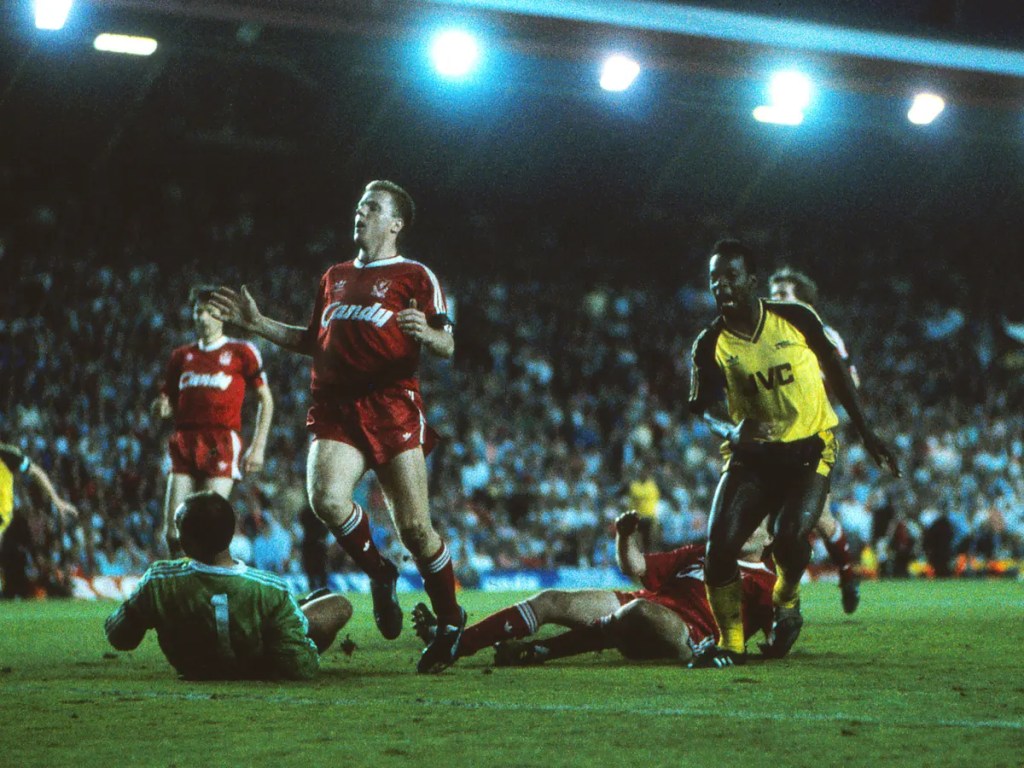
The second half was when the drama really unfolded. Smith scored after 8 minutes from a free kick off Winterburn, which the Liverpool players furiously protested, for no reason other than they didn’t think they would be able to get through the Arsenal defence that day. And then, the seconds and minutes ticked by and the game went into injury time. I believe it was Liverpool’s McMahon who told his team mates that it would be one minute added. Easy stuff. Just kick the ball as far forward as possible and get it over with. But sport can be a cruel business at times. The time added was 2 minutes and 39 seconds. Enough for Arsenal to make one final run. And they did. Every single move of that run is like a frozen frame in my memory. John Lukic the Arsenal keeper bowling the ball to Dixon who launched it towards Smith who flicked it towards Thomas. And those last few seconds as Thomas went past the last Liverpool defender keep playing in slow motion as I type this. Between Thomas and the goal stood Bruce Grobelaar. An intimidating presence in the Liverpool goal, known for putting off some of the best strikers with his antics. He seemed to cover the net end to end with his rubber like body. But in those last few seconds, just as Thomas raced towards the goal like a man possessed, Grobelaar charged towards Thomas more as an act of desperation than any sense of purpose. He was, like the other 21 men in the park, perhaps too weighed down by the enormity of the occasion. Thomas slotted the ball in. It was 2-0. Arsenal had won the game and the League. Liverpool for the second year running had found themselves on the wrong side of history.
In the documentary, Arsenal’s greatest player ever, Thierry Henry, described the game as the greatest story in football. Period. And who am I to disagree with the great Henry? No one is ever going to go to Anfield, and beat Liverpool 2-0 in the last game of the season to win the League. It’s just not going to happen. Just as no one is ever going to go 49 games unbeaten in a season. Arsenal have done both. And that’s why I am a Gooner 🙂
Post script:
Simon called me the next day. “Told ya. Shld’ve gone shldn’t ya you wally!” he said in his lovely jewish cockney accent. I told him i couldn’t, wifey being heavily pregnant and all that. He said his grandmother had given birth to his dad while plucking potatoes in Hungary. That’s the first i learnt about his Eastern European roots. Not long after, he called me again. He had some mobile phones given by a “friend” and he was selling them at knockdown prices. Would I be interested? I did want one, and I knew i couldn’t afford one at the prices they were selling so i said sure, lets meet up. So we did, at the cafe opposite Highbury & Islington. He had the set, all boxed up. 100% genuine and guaranteed he told me. Exactly who was giving the guarantee i never asked nor did i enquire about his mystery supplier. But we ended up having a very long chat over an egg roll and coffee. Simon had lost 11 members of his family, including his parents and his siblings in the holocaust. He had managed to escape with some relatives, first to Switzerland and then the UK. The story he told me resonated with me quite deeply. It was a story that every immigrant to a new country will tell you. The racism, discrimination, being refused jobs, poor housing, having to work every waking hour trying to make ends meet. Simon had never married. He lived alone in a one bed council flat in hackney where the heating kept breaking down and he had to buy extra blankets to keep himself warm. He had been a tailor’s apprentice, a baker’s assistant, factory worker. With no formal education or skills, he did what worked best for him. He became a hustler. I asked him if he had ever thought of moving to Israel. He looked at me as if I had gone mad. Mate the only people i know all live in Hackney. How could i move to anywhere else? I doubt if Simon had ever been outside of Hackney aside from Highbury of course. His cockney accent was still tinged with a slight Eastern European one. He told me that when he arrived in the UK he could only speak Yiddish. And no school would take him because of that. “So I learnt it all on the streets you know. ” he said it in a very matter of fact way. A few months after the mobile phone sale, he called me again. He had a nice little line in wide screen TV sets that had just entered the market. I declined. Although the mobile phone had not given me any trouble, if i was going to invest in a new TV set, it would’ve to come with a receipt and a warranty. And then i never heard from him again. It was a few years later that i found out from some Arsenal friends that he had been found dead in his flat by some neighbours who hadn’t seen him for a few days. Nothing more was known about him.
He was a good man Simon. Not only did he help me get started with my lifelong Arsenal journey, he taught me that no adversity in life should ever make you want to give up. I dedicate this Blog to the memory of Simon and 1989. Rest in Peace mate. Zichrono livrachah. (May his memory be a blessing).
-
Keeping the eternal flame alive: History of Aza in the Sub Continent
Part 2: Hyderabad (Deccan). The Qutub Shahi regime. Aza under the Asif Jahi Nizams and the legend of Bibi ka Alam
Anwar Rizvi

I first heard the term “Bi ka Alam” in one of my very first Majalis in London at my then local Imambargah, the Idara e Jaaferiya. Although I had Hyderabadi acquaintances in my native Karachi, this was the first time I was to experience an authentic Hyderabadi style majlis. And a replica of “Bi ka Alam” was a very central part of it, along with the lamentation of “Ibn az Zahra Wawaila”. The name aroused curiosity and although it would be several years before I would embark on a proper research on the origins of the Alam and by default the entire history of Aza in Hyderabad, I came to have some understanding of the deep historical connection between the Alam and the entire ritual of Aza in that part of the world during that Shab e Ashoor in South London.
It was sometime in the 15th century that a man by the name of Quli Qutb ul Mulk arrived in Delhi along with his family from Hamadan in Iran. From there he is believed to have made his way south to the kingdom of Deccan which was then ruled by the Bahmani dynasty, also of Persian origins. Quli Qutb ul Mulk went into service of the Bahmani Sultanate, most likely due to the Persian connection and quickly became one of its most senior administrators, being appointed as the governor of Telangana. As the kingdom of Deccan disintegrated and the Bahmani dynasty collapsed, Quli Qutb ul Mulk took over the region of Golconda (present day Tilangana) and declared himself Sultan, following the death of his patron, the last Bahmani king Mahmud Shah in 1518. And thus began a 175 years period of Qutb Shahi reign over what became the kingdom of Golconda. Sultan Quli Qutb Shah as he then became known would rule over what was to become one of the wealthiest kingdoms in India and quite possibly the world, thanks largely to the diamond mines of Golconda and also a thriving cotton industry. Today,, long after the Golconda mines have been exhausted, the diamonds of Golconda are still considered to be the most valuable in the world. The fabled. and much stolen, Koh i Noor is a Golcanda diamond. Given what the Qutb Shahis sat on during their reign, it is probably impossible to measure their net worth. This incredible wealth also had its downsides as the Qutb Shahis were in constant conflict with neighbouring states as well as the Mughals in Delhi with whom they would eventually sign a treaty of suzerainty. But that was to come much later. Quli Qutb Shah was to reign over Golconda for over 50 years. And he would use the vast wealth at his disposal to turn Golconda into one of the most powwerful kingdoms in the sub continent. He invested heavily in making his military one of the strongest and set about expanding his empire further south, capturing several ports on the Indian Ocean, thereby further increasing the kingdom’s wealth as well as gaining access to another valuable commodity: Pearls from the Indian Ocean. And while Qutb Shah consolidated, strengthened, stabilised and expanded his empire, he also laid the foundations of the rituals of Azadari in the state under official patronage. Qutb Shah’s reign ended in a bloody and brutal manner when he was murdered by his own son, but his name would become inextricably linked with Azadari in Hyderabad Deccan and the state would begin to attract devotees of the Ahlulbayt (AS) from all over the sub continent as well as Iran and Afghanistan. The Qutb Shahi rulers were native Persian speakers and during the early years of their reign and certainly during the reign of Quli Qutb Shah, Farsi become the lingua franca of the state, with the native Telugu as a second language. It was during Quli Qutb Shah’s reign that many poets and writers migrated from Iran to Deccan and for many decades Persian was also the main language of lamentation during Muharram. Urdu was introduced into the state mainly by migrants from other parts of the sub continent and would ultimately replace Persian as the main language of Azadari and that remains the case to this day.
But the crowning glory of the Qutb Shahi reign was the founding of the city of Hyderabad by the 5th Sultan Muhammad Quli Qutb Shah. The city, named after Maula Ali (AS) was built around the historic Charminar. This magnificent monument was to be the centrepiece of the new city. Sultan Muhammad Shah was a lover of arts and literature and Hyderabad was to become the cultural capital of India.. Alongside that the city also became the world’s premier centre for diamond and pearl trading and by default became one of the wealthiest cities in the world. The Qutb Shahis went on to build many magnificent buildings in the city, but their great passion was to build some of the most elaborate Imambargahs and Mosques anywhere in the sub continent. Among the most prominent being the Makkah Masjid which was built on bricks made from soil brought from Makkah and the Badshahi Ashurkhana which would over the years become the focal point of Ashura processions in the city. And it was during the era of Sultan Muhammad Shah that Hyderabad started to gain prominence as the epicentre of Aza in the sub continent.
The Qutb Shahi kings had, throughout the different eras of their reign, embarked upon collecting as many relics of the Ahlulbayt (AS) as they could from various parts of the Middle East. And it was the Princess Hayat Bakshi Begum, Queen consort to the 6th Qutb Shahi king and Queen mother to the 7th. , who acquired the mystical and hugely revered Bibi ka Alam from Madinah. This Alam is considered particularly sacred as it contains a piece of wood which is believed to be from the wooden plank upon which Syeda Fatima al Zahra (SA) was given her final ablutions. The Alam, which is also known as Bibi ka Alawa, was brought to Hyderabad during the reign of Abdullah Qutb Shah and for many years was kept in the Qutb Shahi ashurkhana near Golconda fort. Many decades later, six black pouches were added to Bibi ka Alam by the Nizams, further adding to the mystique of the much revered standard. More on that later. Hayat Bakshi Begum also initiated the now defunct Langar jaloos that was brought out on the 5th of Muharram. Hayat Begum ensured that no expense was spared for the juloos and at its peak elaborately decorated elephants, camels and horses were brought especially for the procession. At the end of the jaloos khichdi khatta would be served to everyone at the expense of the state. This became a signature dish for Hyderabadi muharrams and it is still served for faqa shikni on Ashura at most Hyderabadi gatherings.
The Qutb Shahi regime ended in 1687 after being attacked, put under siege and finally defeated by the armies of the Mughal emperor Aurangzeb. The Mughals had never quite seen eye to eye with the Qutb Shahis. The fabled wealth of Golconda was something they could not match despite presiding over a vastly bigger empire and the sophistication of Hyderabadi arts and culture was never quite matched by the capital of Delhi. Aurangzeb had many scores to settle and he went about it in a particularly brutal way. The Badshahi Imambargah was turned into a horse stable and much of the building was damaged. Most of the ashoorkhanas in the city and state were ordered to shut down and the rituals of Aza came under very strict scrutiny. Many of the prominent Ulema, poets and reciters under the patronage of the Qutb Shahis left or were forced to leave Hyderabad.
Things gradually started to improve following the death of Aurangzeb and the more tolerant nature of subsequent Mughal kings but Hyderabad remained under Mughal rule until 1724 when Asif Jah the 1st defeated the Mughal governor Mubariz Khan and established the Asif Jahi dynasty. The state was renamed Hyderabad Deccan with the city of Hyderabad as capital and this dynasty was to rule uninterrupted until annexation by India in 1948. The Asif Jahis called themselves Nizams. They were Ahlul Sunnah and are believed to be descendants of the 1st Caliph Hazrat Abu Bakr (RA). They were devoted lovers of the Ahlulbayt (AS) . It was during the Asif Jahi reign that Azadari returned to Hyderabad Deccan in its full pomp and glory.
The Nizams patronised Muharram as well, if not better than the Qutb Shahi kings. Imambargahs were restored and renovated. More were added. The most famous one being the Azakhana e Zahra, built by the last Nizam, Mir Osman Ali Khan in memory of his late mother. It is also known locally as Ashoor khana Madar e Dakhan. The Nizams also relocated Bibi ka Alam to a newly constructed building close to the Badshahi Imambargah, and this became known as Alawe Bibi . This was to become the focal point of Aza in Hyderabad. The Nizams remained at the forefront of this and it became a tradition for the ruling Nizam, members of his family and the royal court to be present when the Alam was raised on the day of Ashura and placed on a specially dedicated elephant to lead the markazi jaloos (central procession). A special trust (jageer) was set up by the Nizams for the upkeep of Bibi ka Alawa and the elephant that carried the Alam and this continues to date. During the reign of the last Nizam Mir Osman Ali Khan, the Langar juloos on the the 5th of Muharram was finally abolished and all efforts were now focused on making the Ashura procession the largest and most well attended in the sub continent. As for the mysterious 6 black pouches attached to Bibi ka Alam, legend has it that they contain priceless pearls, rubies , emeralds, and diamonds given as “nazr” by the Nizams including some precious diamonds owned by the last Nizam Mir Osman Ali Khan who donated them in the last days of his reign. As none of the precious stones have ever been seen in public, they are simply referred to as “jawaherat” or precious jewellery.
The Asif Jahi reign came to a rather tragic end when Hyderabad was invaded by the Indian army in 1948 and annexed into India itself, and with that ended the centuries old royal patronage of Aza in Hyderabad. But it did not, in any shape of form, mean the end of Azadari itself. On the contrary, Azadari has survived and continues to thrive, despite the heavy migration of Hyderabadis, both Shia and Sunni to Pakistan and subsequently to many different parts of the globe. Hyderabad still boasts one of the largest Muharram commemorations anywhere in the world. And state patronage firstly by the erstwhile Andhra Pradesh government and its recent successor the government of the newly formed state of Tilangana continues. The upkeep of Bibi ka Alawa is still paid through the HE Nizam trust.
The day of Ashura begins with simultaneous processions from Ashoorkhana Naal e Mubarak (believed to hold a piece of the helmet worn by Imam Hussain (AS) in Kerbala) , and Ashoorkhan Hazrat Abbas (AS). The processions converge at Bibi ka Alawa from where the markazi juloos is brought out after Zohr prayers and Majlis. Members of the former royal family of Hyderabad still attend the procession at Bibi ka Alawa and make their offerings. The almost 10 kms long procession winds its way through the old city of Hyderabad before finally ending at Masjid e Elahi in Chaderghat. The procession as always is led by Bibi ka Alam on the back of a specially trained elephant. Devotees chant Ibn az Zahra wa waila as they have done for hundreds of years and beat their chests. The streets are lined by people of all sects and all faiths. In a heavily polarised India of today, Ashura in Hyderabad is probably the only instance where Shia and Sunni, Hindus and Muslims, and people of every other faith come together to pay their respects to the abiding legacy of Kerbala and Imam Hussain (AS). And if there is any truth to the old adage of love conquering everything, then the proof is to be found on the historic alleyways of Hyderabad on the day of Ashura.
And so my thoughts stray back to my first Shab e Ashur at Idara e Jaaferiya in South London 40 odd years ago. And many Shab e Ashurs since. When Quli Qutb Shah sat on the throne of his newly formed kingdom of Golconda, and made it one of his missions in life to propagate the message of the Ahlulbabyt (AS) under his patronage, he could not have envisaged in his wildest dreams how far and wide his legacy would spread. The Shia of Hyderabad have moved in every direction of the globe, and they have taken Bi ka Alam and the chants of Ibn az Zahra wa waila with them wherever they have gone. It is my intention to write a completely separate blog on the history of Aza in the UK but this blog will not be complete without mentioning the massive role played by the Hyderabadi community in the establishment and promulgation of Azadari in London. Whether it was majalis being held in the basement of the house of the late Uncle Siraj (a nephew of the great Allama Rashid Turabi marhum) or the subsequent purchase of the building of Idara e Jaaferiya in South London itself, they have been at the forefront of Aza in the UK at all times. Quli Qutb Shah would’ve been very a very proud man indeed.
Labbayk Ya Hussain!
-
Keeping the eternal flame alive: History of Aza in the Sub Continent
Part 1: Khairpur Mirs. The Talpur dynasty and Azadari in Sindh
Anwar Rizvi
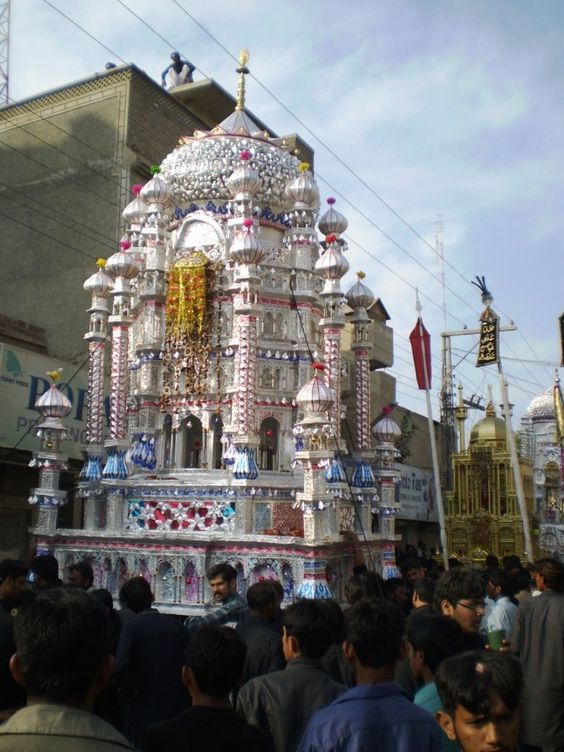
It was a scorching hot summer’s day on the 6th of June, 1963. It was the day of Ashura, the 10th of Muharram ul Haram. The Shia of the village of Therhi in the district of Khairpur, just like their fellow Shia all over the world, were preparing to bring out their traditional Taazia procession. Emotions were running high in the village. They always do at this time of the year. But this year there was added tension. Villagers had been receiving threats from a nearby Madressah about not bringing out the Taazia on the road as it was considered biddah in their eyes and avoiding a certain route for the procession as it went past the Madressah. The villagers were having none of it. This was Khairpur after all. Azadari ran through people’s veins. It was in their DNA. They were not willing to compromise. A clear message was sent back to the Madressah: the Taazia will be coming out and the route will not be changed. What followed was one of the worst single incidents of Shia killings on record. A mob of thousands armed with axes, swords, machetes and knives attacked the procession. Over 160 were hacked to death in cold blood as the local police stood by and did nothing to stop the killers. The incident was completely covered up by the authorities and press were ordered not to mention the incident in any great detail. Although a report was published later that year, it did not mention any names and avoided blaming any particular group. To this day, the families of the victims of the Therhi massacre await justice. But why did a tragedy like this happen in Khairpur, a usually sleepy backwater of Northern Sindh where Azadari in its present form had been going on quite peacefully for at least 300 years and relations between various communities had always been very cordial? Muharram after all was for everyone. In fact the entire province of Sindh is quite unique in the sense that the traditions of Muharram are respected and in fact revered by all communities, including non Muslims, and sectarian tensions are still a relatively rare occurrence with the exception of Karachi.
Origins of Azadari in Sindh can be traced back to the 6th century AD when the then ruler of Sindh, the Raja Dahir gave sanctuary to the descendants of the Ahlulbayt (AS) who were fleeing from the oppression of the Ummayads. Raja Dahir’s defeat at the hands of the Ummayad general Muhammad bin Qasem and the subsequent conquest of Sindh by the Ummayads resulted in another prolonged period of oppression of the Syeds and their followers and it is very likely that most were either killed, taken prisoner or sought refuge in other parts of India beyond the reach of the Ummayad armies. However the influence of the Syeds remained through the many Sufi saints that had attracted large numbers of devotees both Muslims and non Muslims alike and despite the many harsh measures taken by the Ummayads to suppress and wipe out any form of devotion to the Ahlulbayt (AS), the seeds of love had taken root firmly and the saints became more revered and respected over the centuries than the Ummayad conquerors. This influence manifested itself in many forms and when the Kalhora king Mian Ghulam Shah Kalhoro decided to relocate his capital from the historical capital of Sindh, Khudabad to the more eastern banks of the river Indus due to constant flooding of the former capital, they were advised by the devotees of the Ahlulbayt (AS) to name the city after Imam Ali (AS). And so the new capital of Sindh became known as Hyderabad or the Land of the Lion, one of Imam Ali’s many names. It is said that this particularly pleased the then Shah of Iran who gifted the Kalhoras with an imprint of Imam Ali’s feet and it became and remains a place of pilgrimage to this day for tens of thousands of people, known as Qadamgah Maula Ali sharif.
It was not until the rise of the staunchly Shia Talpur dynasty that Azadari firmly took root and flourished once again not just in Sindh but across the border in Southern Punjab and parts of Baluchistan. The Talpurs are believed to be of Persian origin and first arrived in Sindh with the armies of Nader Shah Durrani where they settled on the borders of Northern Sindh and Baluchistan. Having assimilated well in the region and formed their own sub clan, they allied with the local tribes to rebel against and ultimately defeat the Kulhoras at the battle of Halani in 1783, thereby becoming the undisputed rulers of most of Sindh, The Talpurs ruled through a system called “Chauyari” meaning four friends. Sindh was effectively divided into 4 administrative regions with Mir Fateh Ali Khan as the first principal ruler. The Talpur kings called themselves Mirs and the state of Khairpur was known for many decades as Khairpur Mir’s or Khairpur Mirus in local slang. The Talpurs were passionate about Azadari and under their rule the traditions of Aza flourished and prospered. Yet despite their own firm beliefs, they promoted a culture of tolerance and Sindh remained for the most part a region where people of all sects and faiths lived in peace and harmony with coercion and conversions almost unheard of. It was perhaps this culture of tolerance that further increased the love of the Ahlulbayt (AS) among the local populace and Muharram rituals became as much part and parcel of non Shia as they did of the Shia themselves. Ya Ali Madad became the most common form of greeting among people and to a large extent remains so to date.
The Talpurs would eventually be defeated by the British and General Charles Napier through the usual mixture of deceit and division and unilateral abrogation of treaties with the Talpurs. The Mirs were imprisoned and exiled to Calcutta. Their homes and palaces were looted and even the ladies of the household were not spared as they were relieved of all their jewellery and valuables. The Khairpur branch of the Talpurs was to survive only by virtually signing a treaty of accession to the Biritish. Despite the tragic ending of their rule, the Talpurs had already left an indelible mark on the traidtions of Aza, The skyline of the capital Hyderabad was dotted by Alams of various sizes and colours, and Muharram processions came out in full pomp and glory with everyone participating regardless of faith. The Talpurs would gather in Hyderabad for Ashura where they would lead the main procession and money was distributed to various localities for people to cook food and break their “faqa” at the end of the procession. Mir Fateh Ali Talpur, the first Mir asked his chief of staff Faqir Muhammad Junejo to have a Taazia built as a replica of the the Zareeh of Imam Hussain (AS). It was kept in the Imabargah in Peshori Mohalla which also became known as Faqir Jo Pir after Faqir Muhammad Junesjo. When the deposed Mir Hasan Talpur returned from exile in Calcutta, he gave the Taazia to Mirza Fateh Baig who was the mutwalli of the historic Aliabad Imambargah in Tando Agha, The Taazia is still kept in Aliabad Imambargah and is probably the oldest known Taazia made in this part of the sub continent. The Talpurs built other Shabeeh e Mubarak at Tando Noor Muhammad and Tando Mir Muhammad and these survive in very good condition to this day. Similar shabeehs on a smaller scale were built in other towns and villages across Sindh. The purpose of building these Shabeehs and Zareehs was to give those who could not afford the pilgrimage to the holy places to feel closer to the Ahlulbayt (AS) and to observe the rituals of mourning as close to their localities as possible. The Talpurs also constructed a prayer hall and Imambargah around the Qadamgah Maula Ali (AS) to allow greater access and open pilgrimage to the general public. Today the Qadamgah sharif attracts tens of thousands of devotees, Shia, Sunni, Hindus and Christians from all over Pakistan, as well as India, Afghanistan and many other countries. For many years during the Talpur rule, the ladies of the Talpur family would visit during Thursday nights after Maghreb and a special room was reserved for them to spend time in prayers and offer their respects. It is also at this very place that many prominent poets during the Takpur dynasty composed some of their most acclaimed poetry on the Ahlulbayt (AS) in Sindhi, Urdu and Farsi and this tradition in fact continued during the British occupation.
As the British rule entrenched across Sindh and the entire sub continent, Khairpur under the last surviving Talpur Mirs replaced Hyderabad as the epicentre of Aza. As in Hyderabad, the Talpurs continued with their devotion to Azadari and the city and state of Khairpur attracted lovers of the Ahlulbayt (AS) from all over the sub continent. Official patronisation of Muharram processions and the construction of Imambargahs, Zareehs and Shabeehs in almost every locality of Khairpur continued under the various Mirs that ruled Khairpur under the British until independence and partition in 1947. Khairpur was given Princely state status within the Dominion of Pakistan as it then was. And within that framework the Mir of Khairpur had limited autonomy to run the affairs of his state. However the agreement was never implemented fully in letter and spirit and the Mir found himself increasingly at odds with the Pakistani government. Things really came to a head after the assasination of Liaquat Ali Khan. The succeeding adminstrations further curtailed the powers of the last Mir George Ali Murad Khan and the writing for the Talpur dynasty was pretty much on the wall. Despite his travails as now a ruler in all but name, Mir Ali Murad did what his ancestors had done for centuries. He did not allow his substantially reduced powers to compromise on his passion for Aza and his devotion to the Ahlulbayt (AS). In the 1950s Mir Murad Ali sent 2 masons to Kerbala to closely study the design of the shrine of Imam Hussain (AS). He wanted to build an exact replica of the shrine in Khairpur. The masons spent almost 6 months in Karbala and upon return they built a Shabeeh of the holy shrine which is remarkably similar to the original. One of Mir Murad Ali’s ancestors had a similar Shabeeh built at Kot Diji, effectively the second capital of Khairpur state, but as it’s built on private property it remains open to members of the Talpur family only.
In 1955, as Pakistan was slowly working through one constitutional crisis after another in her quest to become a fully independent republic. the State of Khairpur was formally annexed into Pakistan and thus ended the rule of the Talpur dynasty after almost 300 years. Despite the ending of the Talpur rule, the traditions of Aza remain alive, well and thriving in the city of Khairpur and the environs. Mir George Ali Murad Khan, now in his 90s, still holds a public Majlis at Faiz Palace, his ancestral abode. As an interesting aside, Mir Ali Murad took the daughter of the renowned scholar and orator marhum Allama Rashid Turabi (RA) as his second wife. His first wife was the daughter of the last Nawab of Bahawalpur.
Which brings us to that fateful afternoon in village of Thehri in June 1963. While the tragedy was completely covered up by the authorities and no culprits have ever been named. Was there an element of vindictiveness by some extremists who held a grudge against Azadari being given such prominence by the state itself during the Talpur era? Would the tragedy have occurred if Khairpur’s status had not been changed. as tolerance had been the hallmark of the Talpur rule.? Quite clearly this was an attempt to create sectarian disharmony and instill fear among people, in an attempt to stop Muharram rituals from taking place. It didn’t work, The murderers may have got away with their crime, but they failed in their attempt to extinguish the flame of eternal love.
Labbayk Ya Hussain!
-
Hello World!
Welcome to WordPress! This is your first post. Edit or delete it to take the first step in your blogging journey.
-
Subscribe
Subscribed
Already have a WordPress.com account? Log in now.
 Rizvirambles